Accepts orders three ways.
Upload a PDF or image, receive it by eFax, or pull it from ClinixBoost EHR. Multi-page order sets are read in full; consent forms and education sheets are set aside. Only signed, approved orders are processed.
01 / Current capability · Documentation & review
NCCN Compliance Checker. Clinical decisions remain with the care team.
NCCN Compliance Checker
Where it fits
Clinical context
The patient behind the decision
Supporting evidence
The rationale, with its sources
Coverage clarity
Requirements and unresolved gaps
Financial visibility
Expected costs and assumptions
Measurable outcomes
What happened after the decision
01 / What it does today
Upload a PDF or image, receive it by eFax, or pull it from ClinixBoost EHR. Multi-page order sets are read in full; consent forms and education sheets are set aside. Only signed, approved orders are processed.
Regimen, medications, dosing, routes, schedules, premedications, and hold parameters, alongside the diagnosis, stage, histology, and biomarkers. Drug names stay as the clinician wrote them.
Across 90+ cancer types, the whole combination is evaluated against the recommended-use text for the patient’s indication, not just an evidence category in isolation.
A PDF with the determination, its rationale, the NCCN reference, alternative NCCN-listed regimens, and an audit trail. Delivered by eFax, download, or back into the EHR.
02 / Evidence and citations
Each treatment receives one of two determinations: it matches NCCN recommended use for this patient’s scenario, or it does not and needs justification or modification. Either way the report states the guideline name, the recommended-use text that applies, the evidence category, and any caveats.
Every extracted field carries a confidence score and a reference to where in the source document it was found, so a reviewer can check the extraction against the original page.
A health plan’s drug policy can be checked alongside the guideline. The policy document is read for its general requirements, condition-specific indications, and exclusions, and the patient’s scenario is compared against each.
Name, date of birth, age, height, weight, body surface area, allergies
Primary diagnosis, cancer type, disease category, stage, histology, biomarker status
Regimen, medications, dosing (mg/m², mg/kg, AUC), routes, cycle day, frequency, premedications, hold parameters
Order date, ordering physician, approval status, confidence score for each field
What the report records from each order.
03 / What the clinician reviews
04 / Who it serves
Fewer avoidable delays between a treatment decision and its approval, and a rationale the care team can explain.
Prior authorization documentation assembled from the order itself, with the guideline citation attached. Pharmacy teams can verify protocol alignment before dispensing.
Reviewers receive the same structured report, by fax or through the platform, with pre-extracted data and the guideline basis visible. Plan deployments are arranged individually.
Fax-in, fax-out and document intake fit existing workflows without integration work; a connection from other EHRs is on the roadmap.
05 / Example output
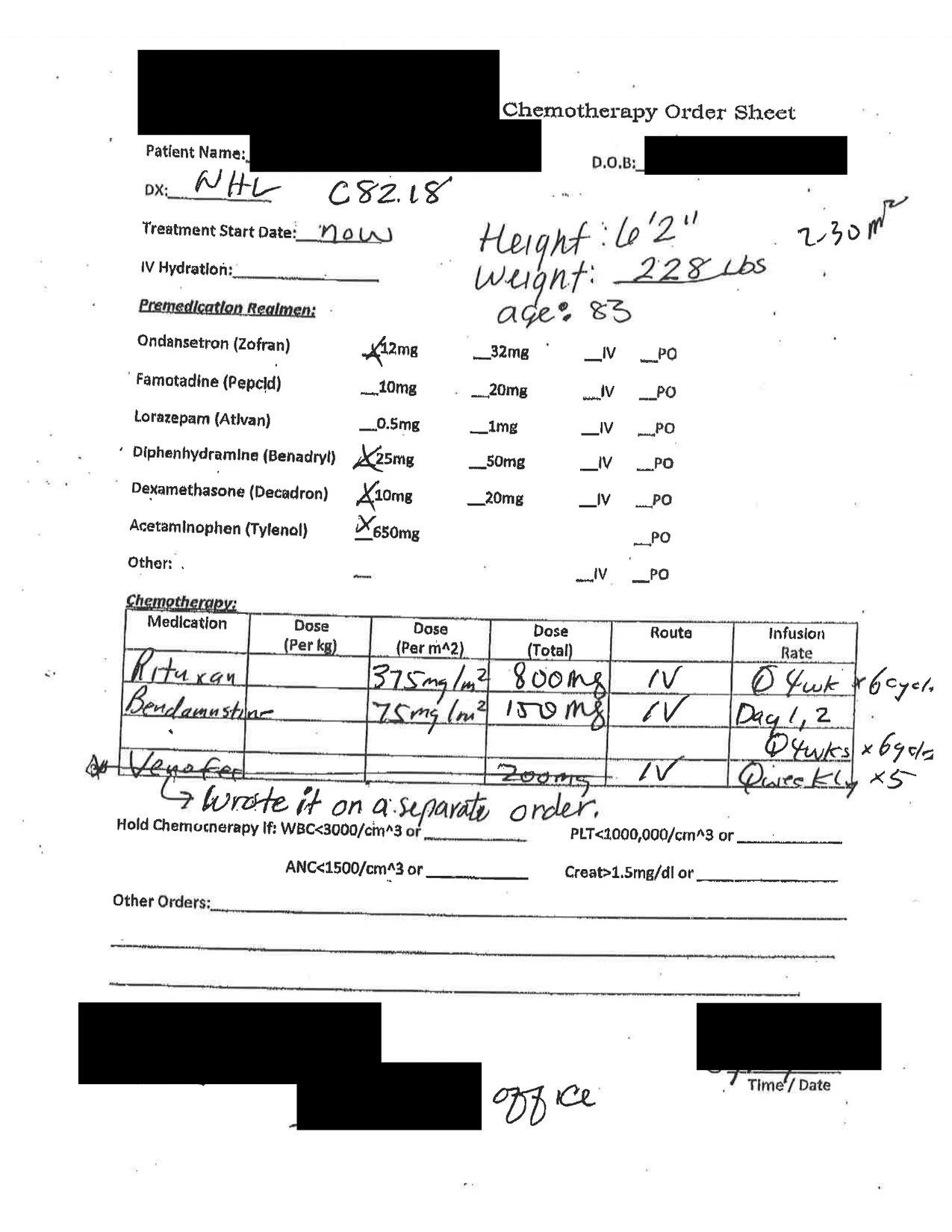
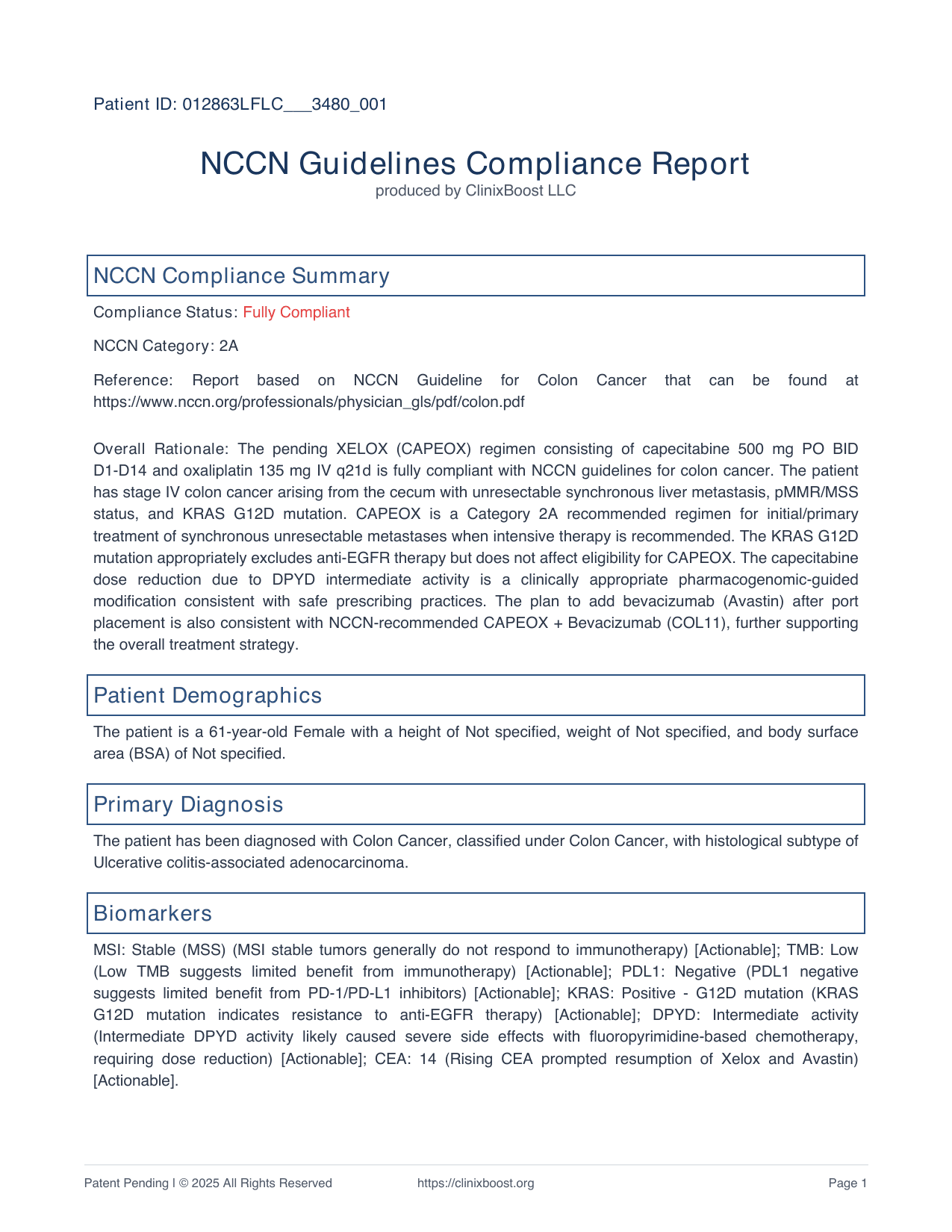
A real case, de-identified: names, dates of birth, dates of service, signatures, identifiers, and the practice’s details have been removed.
A shared ambition